Pre-Owned Luxury Watch Certification: What It *Really* Means (and When It Actually Matters)
Buying a pre-owned luxury watch with a “certificate” attached can feel like you’ve just reduced the whole hobby to a tidy, risk-free transaction.
You haven’t.
A certification is a signal. Sometimes it’s a strong one. Sometimes it’s decorative paperwork that rides along with a sales pitch. The difference lives in the details: who issued it, what they inspected, what they refused to vouch for, and whether the results are verifiable without “trust me” energy.
Certification isn’t a universal guarantee (and it’s not supposed to be)
Here’s the thing: “certified” in watches doesn’t mean one standardized thing the way, say, a lab report might. It can mean anything from *“we checked the serial matches our database”* to *“we disassembled the movement, measured amplitude in multiple positions, pressure-tested the case, and warrant the result.”*
Same word.Wildly different realities.
In my experience, the most common buyer mistake is assuming certification equals *quality*. A watch can be authentic and still be a future money pit. Another can be mechanically healthy but full of replaced parts that crater collector value. That’s especially important in fast-moving global resale markets, including luxury watches in Dubai. Certificates don’t magically reconcile those tensions; they just pick which ones they care about.
One-line truth:
A certificate that won’t show you its scope isn’t worth your confidence.
What certifications tend to check (and what they quietly skip)
Some programs are basically authenticity screens. Others are condition audits. A few try to do both, then get vague when the results are inconvenient.
Typical checks you’ll see in a credible program
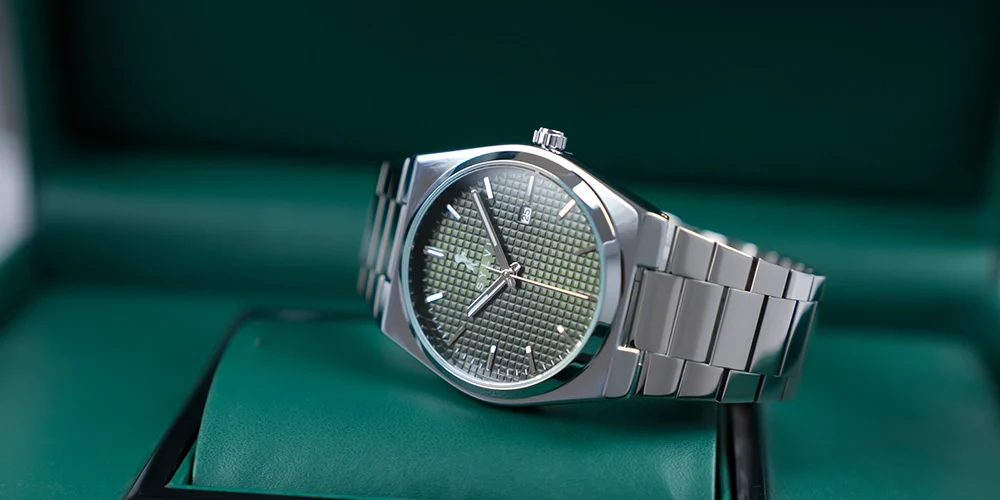
You’ll usually find some mix of:
– Authenticity review: serial/reference verification, movement/case consistency, logo and engraving inspection
– Movement health: timing results (rate, amplitude, beat error), power reserve behavior, winding/setting function
– Case and exterior condition: wear, polish level, bracelet stretch, crown/tube integrity
– Water resistance: pressure test results (if the issuer is willing to stand behind it)
– Provenance/service documentation: receipts, service records, sometimes ownership trail
Now, the skip list. This is where people get hurt.
Common omissions (even when the watch is “certified”)
Look, plenty of certifications don’t go deep on:
– Dial originality (re-lume, repaint, reprint, “refreshed” markers)
– Over-polishing analysis (softened lugs and rounded chamfers that kill value)
– Parts correctness at the micro level (correct hands for year, correct crown generation, correct date wheel font)
– Movement wear that doesn’t show up on a quick timing snapshot (rotor axle wear, barrel wall scoring, lazy reversers)
– Real-world water resistance after wear and thermal cycling (a single pass test is not a lifestyle promise)
A watch can time “fine” and still be grinding itself internally. I’ve seen it more than once.
“So… does certification add value?” Sometimes. Sometimes it adds *liquidity*.
A good certification doesn’t just prop up price; it reduces the buyer’s perceived risk. That changes how quickly a watch sells and how hard someone negotiates.
Certified pieces often get:
– quicker offers
– fewer “prove it” conversations
– less discounting over authenticity anxiety
But the premium isn’t automatic. It’s conditional on credibility and on what the market cares about *for that reference*.
A modern ceramic sports Rolex buyer usually wants clean authenticity + condition reassurance. A vintage gilt-dial Submariner buyer wants a near-forensic originality narrative (and will pay accordingly). Different appetites, different premiums.
A quick stat (because sentiment isn’t data)
Counterfeit prevalence is not evenly distributed across categories, but the scale of the issue is real. For example, the Swiss watch industry has pointed to tens of millions of counterfeit watches produced annually in broader global estimates, often cited around ~40 million/year (Federation of the Swiss Watch Industry FH communications and press references have repeated this figure over time). That doesn’t tell you how many hit high-end resale channels, but it does explain why authentication has become a selling point instead of an assumption.
Brand certification vs third-party: pick your poison (and your paperwork)
Brand-run programs: comforting, expensive, occasionally narrow
Manufacturer-backed certification tends to do two things well:
1) It anchors provenance within the brand’s own system
2) It creates a resale story buyers recognize quickly
That recognition matters. People relax when they see an official program name.
But brand programs can also be selective about what they disclose. Some will certify a watch as authentic and serviced without getting granular about replaced components in a way vintage collectors would consider “full transparency.” Also, a brand is never truly “independent” about its own product (that’s not an insult; it’s just economics).
Third-party certification: better transparency, more variance in competence
A strong third-party outfit can be brutally helpful. They’ll flag the stuff brands sometimes glide past: swapped hands, case rework, mismatched movement, dial refinishing, odd lume behavior under UV. The best ones document like auditors.
The problem is the floor is low. “Third-party certified” could mean “a guy with a loupe and a printer.”
So I judge third parties by process, not branding:
– Do they publish criteria?
– Do they provide photos tied to the serial?
– Do they state limitations plainly?
– Will they put a name on the report?
If the report reads like marketing copy, I treat it like marketing copy.
Hot take: most certificates over-index on cosmetics because it sells watches
Movement diagnostics are harder to explain. Scratches are easy.
A shiny case with a “certified” tag moves inventory. Meanwhile, the movement might be limping through low amplitude, gummy lubrication, and a borderline escapement that only shows itself after a few days on the wrist.
That gap, between what looks good and what runs well, is where buyers get fooled.
What I want to see on movement health (not just “it works”)
If someone claims a watch is mechanically verified, ask for:
– timing results in multiple positions (not one screenshot)
– amplitude and beat error numbers
– power reserve observation (not theoretical spec)
– notes about rotor noise, winding feel, and setting action
– service date and what was done (clean/oil/adjust vs full overhaul)
And yes, sometimes you won’t get all that. That’s information too.
Red flags: when “certified” is a costume
Some warning signs are loud, others are weirdly subtle.
If a certificate uses grand language but gives you no hard identifiers, I’m skeptical immediately. Same for any cert that doesn’t tie itself to the watch via serial/reference and photo evidence.
Watch out for:
– vague provenance claims (“from a private collection”) with no receipts or documented chain
– service claims without invoices (“recently serviced” by whom, exactly?)
– no date, no expiration, no report number
– “certified authentic” but no statement on replaced parts
– heavy reliance on “limited,” “rare,” “museum quality” language (that’s sales, not inspection)
Look, a legitimate program can still be minimal. But it won’t be slippery.
The part people forget: certification is only as good as what happens after
Now, this won’t apply to everyone, but if you’re buying higher value, especially vintage, plan for a world where you still do your own due diligence.
A certificate doesn’t replace:
– an independent watchmaker’s inspection (if the price justifies it)
– a return window with enforceable terms
– escrow or payment protections when dealing privately
– your own comfort with the seller’s reputation and documentation quality
I’ve watched buyers cling to paper when what they needed was leverage: clear terms, clear recourse, clear documentation.
A practical checklist (fast, slightly ruthless)
Use this before you let a certification sway you:
1) Who issued it?
Named entity, track record, published standards.
2) What’s the scope?
Authenticity only, mechanical condition, water resistance, originality, provenance, spell it out.
3) Does it bind to the watch?
Serial/reference listed, clear photos, report number, issue date.
4) Are exclusions obvious?
If water resistance isn’t guaranteed, does it say so plainly?
5) Do the claims match the watch’s story?
Year-correct parts, consistent wear patterns, coherent service history.
6) Can you corroborate anything?
Service invoices, brand archive extracts, retailer records, prior sale listings, independent evaluation.
If any one of those turns into fog, slow down. The best deals survive scrutiny. The fragile ones demand speed.
When certification matters most (and when it’s mostly theater)
It matters most when the downside is ugly:
– high-ticket modern pieces heavily counterfeited
– vintage models where originality drives huge price gaps
– watches bought for resale where buyer confidence is the product
It matters least when:
– the price is low enough that service risk is acceptable
– you already have ironclad provenance and service documentation
– the seller’s return policy and reputation do the heavy lifting
A good certification doesn’t “prove” a watch is perfect. It proves someone did specific work, and is willing to be pinned to it.
That’s the standard I’d buy from.